











































Why Consider DEI Training?

DEI Training is designed to increase understanding and appreciation for DEI in the workplace. DEI training in the workplace should be considered for the following reasons:
- Increases awareness and understanding of different cultures
- Encourages civility and respect for others
- Promotes inclusion, belonging, and equal treatment for all employees
- Reduces harassment, discrimination, and bias in the workplace and beyond
DEI training has become increasingly essential to a healthy workplace culture and should not be seen as something to “fix” or a separate organizational strategic initiative. It helps to create inclusion, belonging, and equity in the workplace. DEI training enhances organizational culture and strategically positions organizations for better business outcomes.
Syntrio’s DEI Training
Our DEI online training courses help individuals recognize and use their collective similarities and differences to their advantage. We understand that diversity goes beyond recognizing differences between race and gender.
Your DEI strategy can positively impact your culture when they are supported by leadership and you are transparent with your workforce and marketplace. People will want to work with you, and studies show dramatically improved loyalty patterns associated with feeling understood, respected, and included. Team members will be increasingly engaged by positive changes while, at the same time, you’ll attract a more diverse employee and customer base.
Top DEI Courses
Introduction to Workplace Diversity, Equity, and Inclusion
Diversity, equity, and inclusion in the workplace benefit organizations, the people in them, and those they serve. This course addresses how individuals, groups, and organizations can encourage greater diversity, equity, and inclusion.
Supporting Racial Identity Justice & Equality in the Workplace | Focus
Racial identity historically has served to differentiate individuals and even marginalize those with a minority racial identity. This has led these individuals to suffer societal injustices and inequalities that can carry over into the workplace. This course explores the problems and causes of injustices and inequalities due to racial identity. Further, it addresses ways we can better recognize injustices and inequalities due to racial identity, learn more about this injustice and inequality, and take steps to address these challenges.
Supporting Social Identity Justice & Equality at Work | Focus
Historically, social identity has served to differentiate individuals and even marginalize those with an identity different from the mainstream. This can include identity-based on sex, race, ethnicity, religion, age, disability, sexual orientation, gender identity, and others. This has led these individuals to suffer injustices and societal inequalities that can carry over into the workplace. This course explores the problems and causes of injustices and inequalities due to social identity. Further, it addresses ways we can better recognize injustices and inequalities due to social identity, learn more about them, and take steps to address these challenges.
Supporting Social Identity Justice & Equality at Work | Focus
Historically, social identity has served to differentiate individuals and even marginalize those with an identity different from the mainstream. This can include identity-based on sex, race, ethnicity, religion, age, disability, sexual orientation, gender identity, and others. This has led these individuals to suffer injustices and societal inequalities that can carry over into the workplace. This course explores the problems and causes of injustices and inequalities due to social identity. Further, it addresses ways we can better recognize injustices and inequalities due to social identity, learn more about them, and take steps to address these challenges.
NEW Featured Series
An Introduction to Unconscious Bias
Unconscious bias refers to the limited and unrecognized lens through which we see the world. This can sometimes impede how we view others, leading us to underestimate their abilities and contributions. When we recognize our unconscious bias, we can learn to manage it and enable a broader and richer perspective regarding others and the world.
Diversity, Equity and Inclusion in Conversation
Unconscious bias refers to the limited and unrecognized lens through which we see the world. This can sometimes impede how we view others, leading us to underestimate their abilities and contributions. When we recognize our unconscious bias, we can learn to manage it and enable a broader and richer perspective regarding others and the world.
Understanding Bias and Avoiding Common Mistakes
Everyone has biases. To avoid allowing bias to compromise how we work and relate with others, we need to manage bias and avoid common mistakes stemming from bias. This module explores the keys to managing bias and provides practice for various exercises.
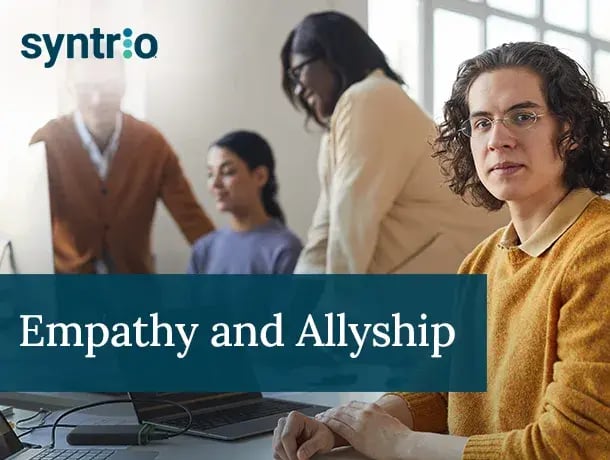
Empathy and Allyship
Meaningful human connections are critical to an organization’s success. Our ability to understand our coworkers and their life and work-related challenges better enables us to value and support them. This course explores empathy and allyship’s critical role in fostering a diverse, equitable, and inclusive workplace.
Micro-Behaviors and Other Messages
Everyone communicates in ways that are sometimes not intended. In addition to what we say, we may communicate with our eyes, gestures, bodies, and other methods. These “micro-behaviors” can communicate both positive and negative messages. The more we understand them, the better we can manage what we communicate.